
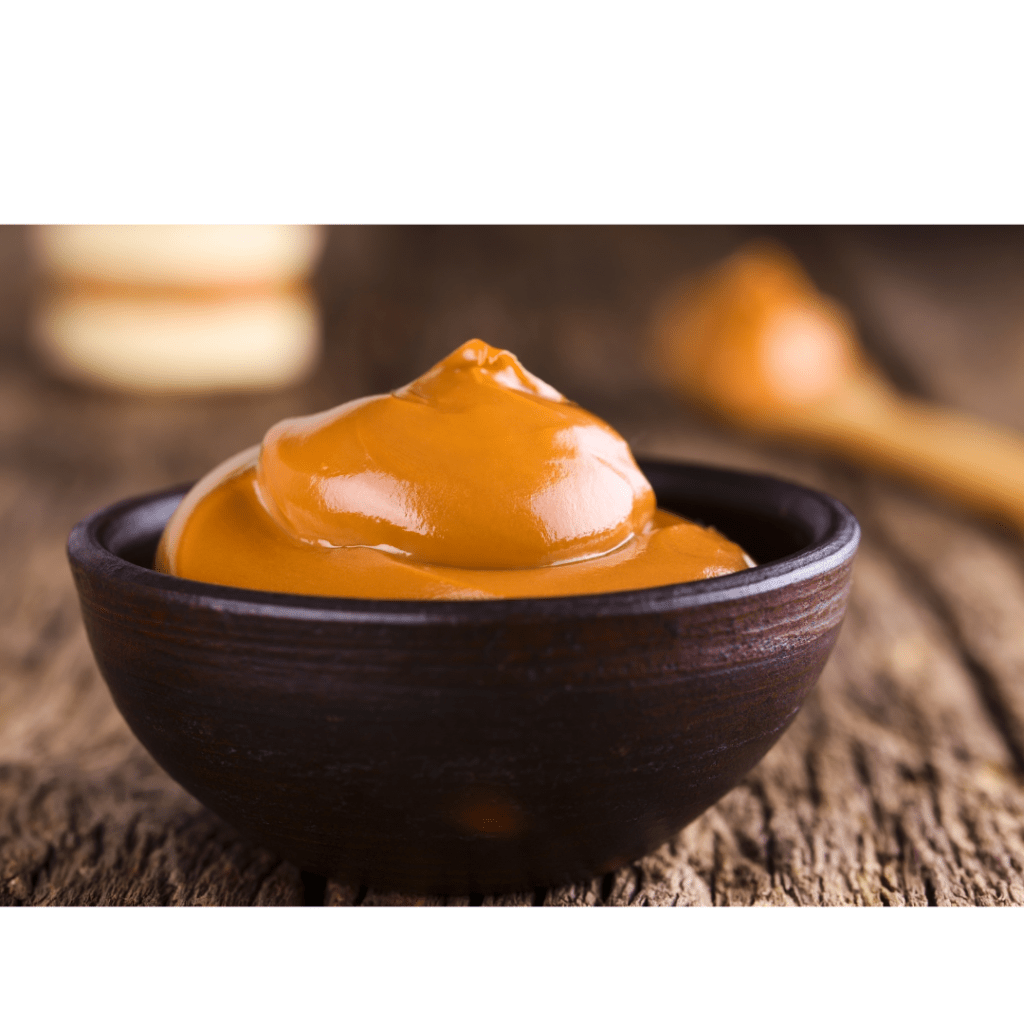
Dulce de leche is a Spanish term that translates to “sweet milk” in English. It is a thick and sweet caramel-like sauce that is popular in many Latin American countries, as well as Spain.
The origin of dulce de leche can be traced back to the 19th century, although the exact history of its creation is uncertain. One theory suggests that dulce de leche was first made in Argentina during the War of Independence, which lasted from 1810 to 1818. According to this theory, the recipe for dulce de leche was created by accident when a group of soldiers left a pot of milk on the fire for too long. As the milk boiled, it caramelized and thickened into a sweet, creamy sauce. The soldiers were said to have been delighted with the delicious result and began to make the sauce on a regular basis.
Another theory suggests that dulce de leche originated in Uruguay, where it is known as “cajeta.” According to this theory, dulce de leche was first made by the gauchos, or cowboys, who worked on the vast ranches of South America. The gauchos would cook milk and sugar together in a large pot over an open flame, stirring constantly to prevent the mixture from burning. Over time, the mixture would thicken and turn a rich caramel color, creating dulce de leche.
Regardless of its origin, dulce de leche quickly became popular throughout Latin America and Spain. Today, it is a common ingredient in many desserts, including cakes, pastries, and ice cream. It is also often spread on toast or used as a topping for pancakes and waffles.
The term “dulce de leche” itself is a relatively recent addition to the Spanish language. According to the Royal Spanish Academy, the term was first recorded in the Spanish language in 1866. However, it is possible that the sauce itself existed long before the term was coined.
The popularity of dulce de leche has spread beyond Latin America and Spain in recent years, with the sauce now being sold in many countries around the world. In some countries, it is known by different names, such as “cajeta” in Mexico and “arequipe” in Colombia. However, regardless of its name, dulce de leche remains a beloved and delicious treat that is enjoyed by people of all ages and backgrounds.
Here is a short list of some words that are commonly associated with dulce de leche:
- Milk: The main ingredient in dulce de leche is milk, which is cooked down and sweetened to make the caramel sauce.
- Sugar: To sweeten the milk and turn it into dulce de leche, sugar is added.
- Caramel: Dulce de leche has a rich caramel flavor and color, similar to caramel sauce.
- Condensed milk: Some recipes for dulce de leche call for using sweetened condensed milk instead of regular milk and sugar.
- Double boiler: A double boiler is often used to cook dulce de leche, as it allows for slow, even heating without the risk of scorching.
- Spread: Dulce de leche can be used as a spread on bread or crackers, or as a filling for cakes, pastries, and other desserts.
- Toffee: Dulce de leche has a similar taste and texture to toffee, with a creamy, caramelized flavor.
- Argentina: Dulce de leche is often associated with Argentina, where it is a popular ingredient in desserts and sweet snacks.
- Alfajores: Alfajores are a type of cookie sandwich that is filled with dulce de leche.
- Confectionery: Dulce de leche is used in many types of confectionery, including candies, chocolates, and truffles.

 Firefly Linguistics