

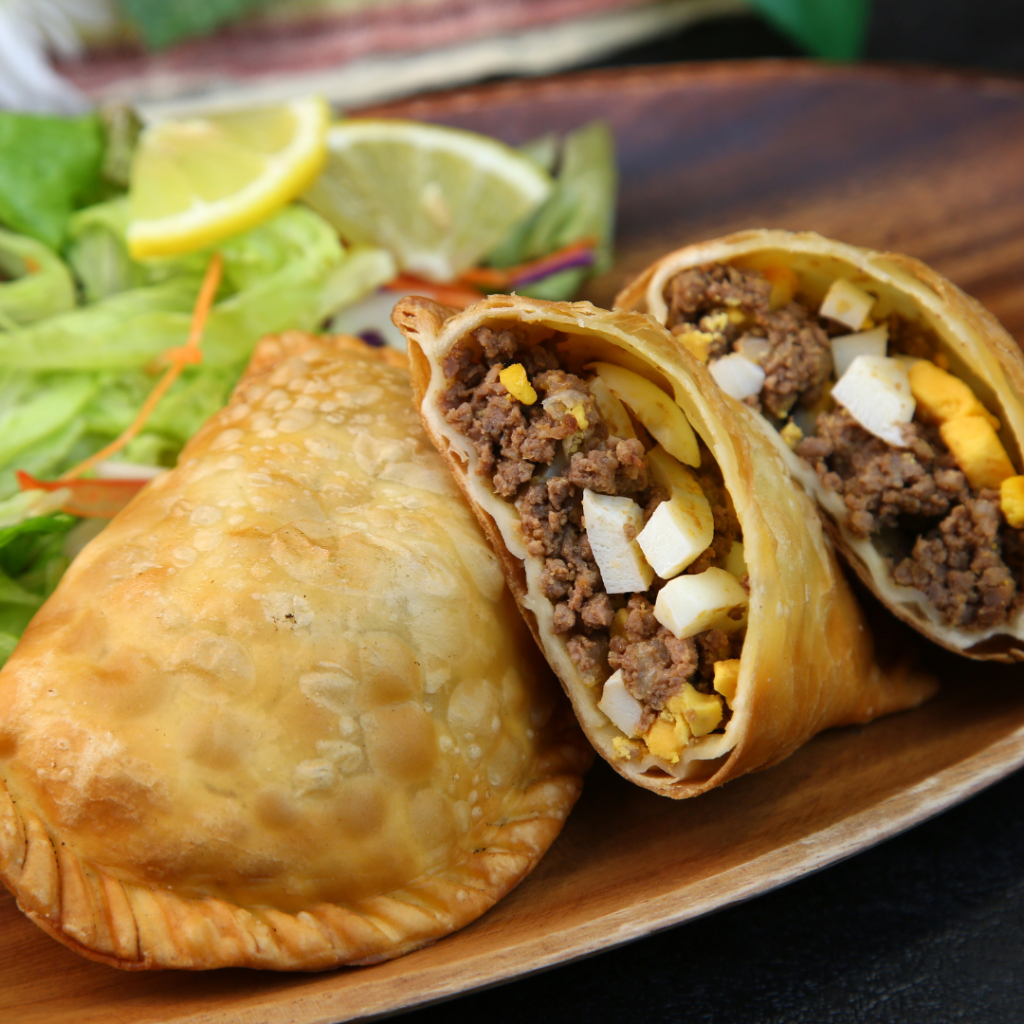
Empanadas, those delightful folded or stuffed pastries with a savory filling, are beloved in Hispanic culture for their delicious taste and portability. But have you ever wondered about the origins of the word “empanada” and how this beloved dish has evolved over time? In this post, I will dive into the etymology of the Spanish word “empanada” and explore the rich history of empanadas in Hispanic culture.
Etymology of “Empanada“
The word “empanada” comes from the Spanish verb “empanar.” This means “to coat with bread.” This verb is derived from the noun “pan,” meaning “bread,” and the prefix “en-” or “em-” which denotes the action of covering or enclosing something. Therefore, “empanada” can be translated to “bread-coated” or “bread-enclosed.”
The practice of wrapping or enclosing a filling with dough, which characterizes empanadas, dates back to medieval Spain. The term “empanar” or “empanada” was used to describe dishes made by enclosing meat, fish, or vegetables with dough and then baking or frying them. These early empanadas were often used as portable meals for travelers or soldiers due to their convenient shape and long shelf life.
History of Empanadas in Hispanic Culture
As Spanish explorers and conquistadors traveled to distinct parts of the world, they brought with them their culinary traditions, including empanadas. Empanadas then spread to various regions of Latin America, the Caribbean, and the Philippines, where they became an integral part of the local cuisine and culture.
In Latin America, empanadas are particularly popular and have become a staple in many countries’ culinary traditions. Each country has its own unique variation of empanadas, with different fillings, dough, and folding techniques. For example, in Argentina, empanadas are often made with a flaky dough called “tapas” and filled with beef, chicken, cheese, or vegetables, often seasoned with regional spices such as cumin and paprika. In Colombia, empanadas are made with corn-based dough and filled with a variety of meats or potatoes, and they are often deep-fried to crispy perfection.
In Mexico, empanadas are known as “empanadas de horno” or “pastelitos,” and they are often made with a sweet or savory filling, such as fruit preserves, chocolate, or meat. In the Caribbean, empanadas are called “pastelillos” or “pastelitos” and are typically made with a flaky dough and filled with seafood, such as shrimp or crab, and flavored with local spices and herbs.
Empanadas also have cultural significance in Hispanic culture and are often associated with special occasions and celebrations. In many Latin American countries, empanadas are a traditional dish served during holidays, such as Christmas, New Year’s Eve, or Independence Day. In some regions, empanadas are also prepared for religious or cultural events, such as Día de los Muertos (Day of the Dead) in Mexico or the Feast of the Three Kings in Puerto Rico.
They are also commonly served at family gatherings, parties, and festivals, and are often enjoyed with a side of salsa, chimichurri, or other condiments for dipping or drizzling.
The versatility and portability of empanadas have made them a popular street food in many Hispanic countries. Empanada vendors can be found in markets, plazas, and street corners, serving up freshly made empanadas to hungry passersby. Empanadas are also often sold at bakeries, cafes, and restaurants, where they are served as appetizers, snacks, or main courses.
Empanadas have also made their mark in the culinary world outside of Hispanic culture. In recent years, they have gained popularity in other countries.
Conclusion:
The word “empanada” has a rich etymology and history in Hispanic culture. Its origins can be traced back to medieval Spain, where the practice of wrapping or enclosing fillings with dough gave rise to the term “empanar,” meaning “to coat with bread.” Over time, empanadas spread to various parts of the world through Spanish exploration and colonization, becoming a beloved dish in many countries, particularly in Latin America, the Caribbean, and the Philippines.
Empanadas have evolved into a wide variety of flavors, fillings, dough types, and folding techniques, reflecting the culinary diversity and creativity of each region. They are not only a delicious and portable meal, but also carry cultural significance, being associated with special occasions, celebrations, and family gatherings in Hispanic culture.
Moreover, empanadas have also gained popularity outside of Hispanic culture, becoming a popular street food, appetizer, or main course in many parts of the world. Their versatility and deliciousness have captured the hearts and taste buds of people from diverse backgrounds, making them a beloved and iconic dish in the culinary world.
So, the next time you bite into a warm and flavorful empanada, remember the rich history and cultural significance behind this delightful pastry. From its humble origins in medieval Spain to its global popularity today, empanadas continue to captivate food lovers with their delicious taste and rich heritage in Hispanic culture. ¡Buen provecho! (Enjoy your meal!)
 Firefly Linguistics